
Start With an Electrical Plan
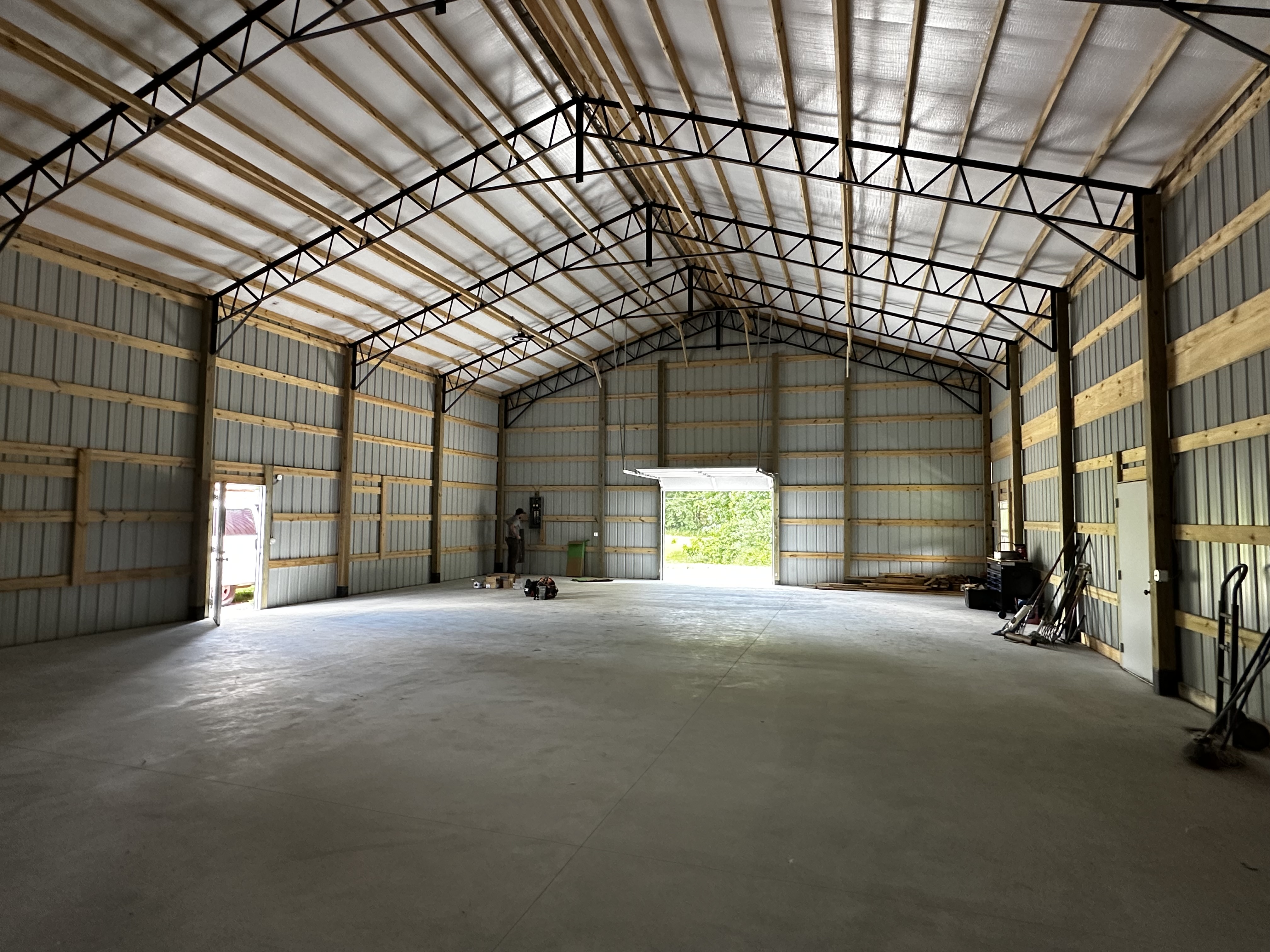
One of the most important steps is determining how you plan to use the pole barn.
Will it be used primarily for storage? A workshop? A garage? Agricultural equipment? Will you eventually install a welder, air compressor, EV charger, or other high-demand equipment?
These questions determine how much electrical service the building needs and where circuits should be installed.
Before wiring begins, consider:
-
How many outlets you need
-
Interior and exterior lighting locations
-
Garage door openers
-
Dedicated circuits for equipment
-
Heating and cooling equipment
-
Security cameras
-
Exterior receptacles
-
Future electrical equipment
-
The distance from the main electrical service to the pole barn
Planning for future needs while the building is being constructed is usually much easier and less expensive than adding circuits later.
Determine the Electrical Service
A detached pole barn may require a separate electrical service or a feeder from the existing electrical service, depending on the property and how the building will be powered.
The required service size depends on the expected electrical load. A small storage building may require relatively little power, while a workshop with large tools and equipment may require significantly more.
Common equipment that can affect the electrical load includes:
-
Welders
-
Air compressors
-
Table saws
-
Large power tools
-
Electric heaters
-
Mini-split systems
-
Water heaters
-
EV chargers
-
Battery chargers
-
Large motors
An electrician can calculate the anticipated electrical load and help determine the appropriate service size.
Plan Your Outlets Before Wiring
Outlet placement should be based on how the building will actually be used.
For a workshop or garage, outlets are often needed along multiple walls so extension cords aren't required for everyday equipment.
Consider installing outlets near:
-
Workbenches
-
Garage doors
-
Tool storage areas
-
Exterior doors
-
Equipment locations
-
Work areas
-
Refrigerators or freezers
-
Battery charging stations
It is also a good idea to think about where equipment may be placed in the future.
Don't Overlook Exterior Outlets
Exterior receptacles are useful for everything from power tools and pressure washers to holiday decorations and lawn equipment.
Outdoor outlets need to be properly protected and installed using equipment suitable for the environment.
If you know where outdoor equipment will be used, planning those outlets during construction can make the finished building much more convenient.
Lighting Makes a Big Difference
Good lighting is especially important if the pole barn will be used as a workshop or garage.
Instead of relying on one or two fixtures, consider dividing the building into lighting zones. This can provide better visibility while allowing you to illuminate only the areas being used.
Common pole barn lighting options include:
-
LED strip lights
-
High-bay lights
-
Shop lights
-
Wall-mounted exterior lights
-
Entry-door lighting
-
Motion-activated lighting
-
Security lighting
Exterior lighting around doors and frequently used areas can also improve visibility and security.
Dedicated Circuits for Equipment
Large equipment should not simply be plugged into whatever receptacle happens to be nearby.
Many pieces of equipment require dedicated circuits based on their electrical requirements.
Examples include:
-
Welders
-
Compressors
-
Garage door openers
-
HVAC equipment
-
Water heaters
-
Large power tools
-
Battery chargers
-
EV chargers
Installing dedicated circuits during the original electrical installation can make the building safer and more convenient while reducing the need for extension cords.
Wiring Methods Matter
The wiring method used in a pole barn depends on the building construction, location, and applicable electrical requirements.
Electrical wiring may involve methods such as:
-
Metal-clad cable
-
Conduit
-
Underground feeders
-
Weather-rated electrical equipment
-
Metal electrical boxes
The correct wiring method should be selected based on the specific installation and applicable electrical code requirements.
Grounding and Bonding
Grounding and bonding are critical parts of a safe electrical installation.
A detached structure with electrical service or a feeder must be properly grounded and bonded according to the applicable requirements. This can include grounding electrodes, grounding conductors, bonding connections, and properly configured electrical panels.
These components are not areas where shortcuts should be taken.
Think About Future Expansion
One of the biggest mistakes homeowners make is planning only for what they need today.
Your pole barn may start as a storage building but eventually become a workshop, garage, or hobby space.
You may later want to add:
-
A mini-split
-
Additional lighting
-
More outlets
-
A welder
-
An air compressor
-
A refrigerator
-
Security cameras
-
An EV charger
-
Additional machinery
Planning for future electrical needs during the initial construction can save time and money.
Should You Use a Subpanel?
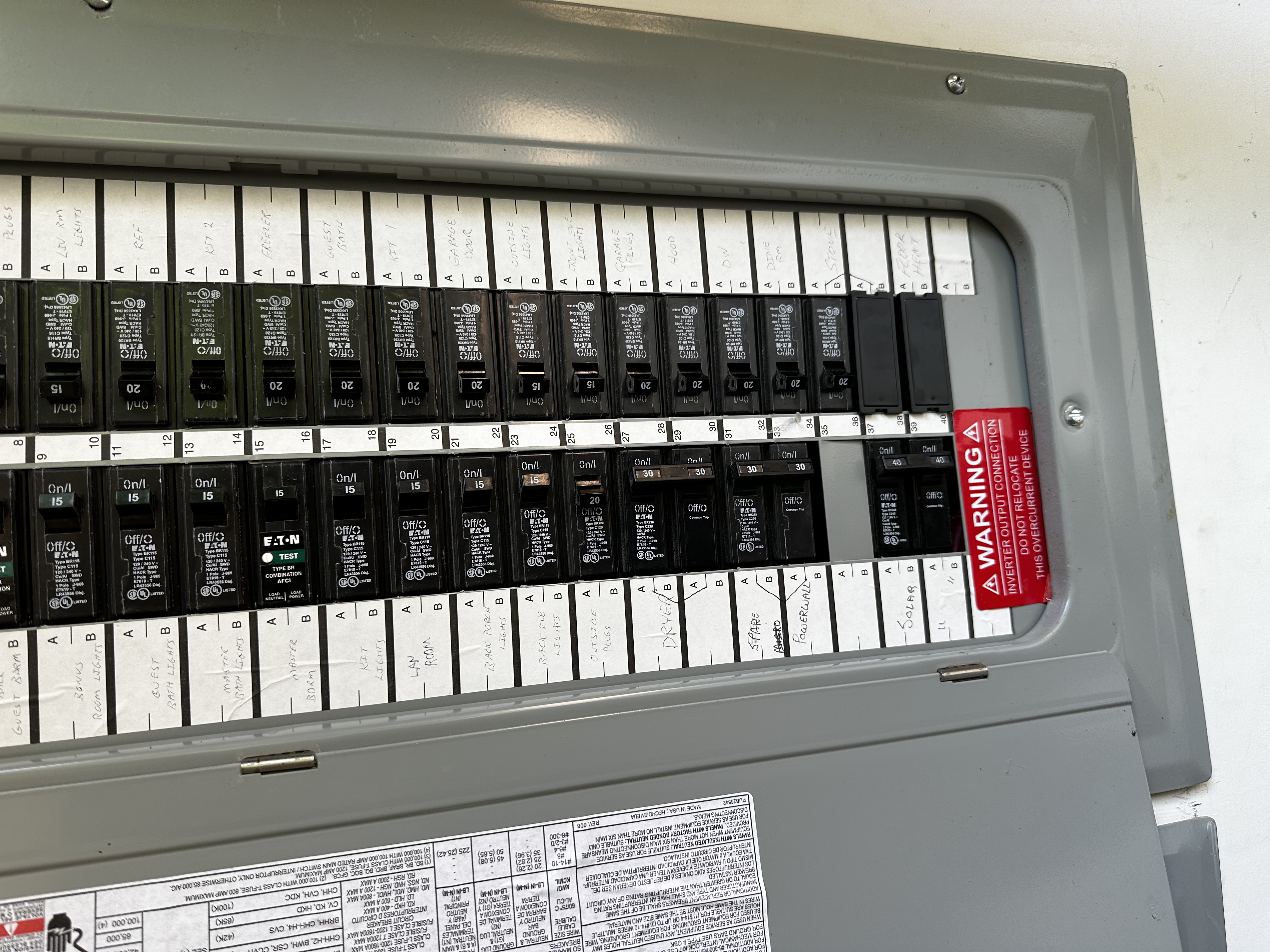
Depending on the size and layout of the building, a subpanel can provide a convenient way to distribute circuits throughout the pole barn.
Instead of running individual circuits all the way back to the main panel, an appropriately sized feeder can supply a panel in the pole barn. Branch circuits can then be distributed from that panel.
The proper panel and feeder size should be determined based on the electrical load and installation requirements.
Why Professional Installation Matters
Pole barn electrical installations can involve service equipment, feeders, grounding, branch circuits, outdoor wiring, and potentially high-demand equipment.
Improper electrical work can create serious safety hazards and may also cause problems with inspections, insurance, or future property improvements.
A licensed electrician can help with electrical load calculations, circuit planning, equipment selection, installation, and testing to make sure the electrical system is installed properly.
Planning a New Pole Barn in Middle Tennessee?
If you're building a new pole barn, garage, or workshop in Middle Tennessee, it is a good idea to plan the electrical system before construction is complete.
I.C. Electric provides electrical installation for pole barns, detached garages, workshops, and other outbuildings, including electrical services, outlets, lighting, dedicated circuits, and equipment connections.
Planning your electrical system early can help you get the most out of your new building while avoiding costly electrical changes later.
Need electrical wiring for a new pole barn or detached garage? Contact I.C. Electric to discuss your project and plan the electrical system around the way you intend to use the building.